Introduction
If you are an employer in Bangladesh, one of the most common compliance questions you may ask is: Is Provident Fund mandatory in Bangladesh?
The short answer is that the Provident Fund (PF) is not automatically mandatory for every company operating in Bangladesh. However, once a Provident Fund is established and recognized under applicable regulations, employers must comply with specific rules regarding contributions, fund management, documentation, and employee benefits.
For businesses in Dhaka, Chattogram, Gazipur, Narayanganj, and other industrial regions of Bangladesh, Provident Fund schemes have become a critical part of employee retention and compensation strategies. Many skilled professionals now consider PF benefits an important factor when evaluating employment opportunities.
This guide explains Provident Fund regulations in Bangladesh, employer responsibilities, tax implications, compliance requirements, and practical considerations for implementing a successful Provident Fund program.
What Is a Provident Fund?
A Provident Fund (PF) is a long-term employee savings scheme where both the employer and employee contribute a fixed percentage of salary into a dedicated fund.
The purpose of the fund is to provide financial security to employees after retirement, resignation, or completion of a specified service period.
A typical Provident Fund includes:
- Monthly employee contributions
- Matching or predetermined employer contributions
- Accumulated savings over time
- Defined withdrawal and settlement policies
In Bangladesh, Provident Funds are commonly offered by large corporations, manufacturing companies, multinational organizations, telecom operators, banks, and group enterprises.
Is Provident Fund Legally Required Under Bangladesh Labour Law?
Direct Answer:
No, Bangladesh Labour Law does not require every company to establish a Provident Fund.
The Bangladesh Labour Act allows employers to establish Provident Fund schemes for employees. However, the obligation to maintain and administer the fund arises once the scheme is officially introduced and recognized.
Employers must then ensure:
- Proper fund administration
- Accurate contribution management
- Employee record maintenance
- Compliance with applicable tax provisions
- Governance according to approved fund rules
For many organizations in Bangladesh, Provident Fund implementation is driven by talent retention rather than legal compulsion.
Why Do Employers Offer Provident Fund Benefits?
Direct Answer:
Organizations that provide Provident Fund benefits often experience:
Better Employee Retention
Employees are more likely to remain with employers offering long-term financial benefits.
Stronger Employer Brand
Job seekers often compare benefit packages before accepting offers.
Increased Employee Loyalty
Provident Fund contributions demonstrate employer commitment to employee welfare.
Competitive Hiring Advantage
Organizations competing for skilled talent often use Provident Fund benefits as a differentiator.
In highly competitive markets such as Dhaka and Chattogram, employee benefits can significantly influence hiring outcomes.
How Does a Provident Fund Work?
Direct Answer:
A Provident Fund works through regular contributions from both employees and employers.
Typical Process
- Employee joins the Provident Fund scheme.
- Monthly salary deductions are made.
- Employer contributes according to company policy.
- Contributions accumulate over time.
- Records are maintained and audited.
- Employees receive benefits upon eligibility.
- Final settlements are processed according to fund rules.
This process creates a structured retirement savings mechanism for employees while supporting long-term workforce stability.
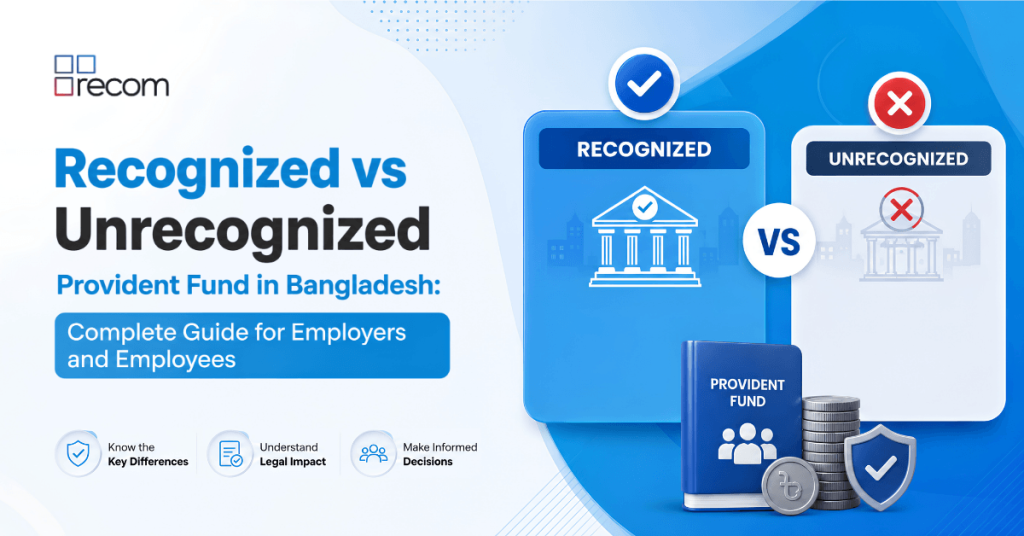
What Is a Recognized Provident Fund?
Direct Answer:
A Recognized Provident Fund is a Provident Fund that meets prescribed legal and tax requirements.
Benefits of recognition may include:
- Enhanced regulatory compliance
- Better governance practices
- Improved transparency
- Potential tax advantages
- Greater employee confidence
Many corporate employers in Bangladesh choose to establish recognized Provident Funds because of these long-term benefits.
What Are the Tax Benefits of Provident Fund in Bangladesh?
Direct Answer:
Potential advantages include:
For Employees
- Tax-efficient long-term savings
- Retirement wealth accumulation
- Structured financial planning
For Employers
- Enhanced compensation package
- Better workforce retention
- Improved employee value proposition
Since tax regulations may change periodically, employers should consult tax professionals before designing Provident Fund structures.
What Compliance Challenges Do Employers Face?
Direct Answer:
The biggest Provident Fund challenges involve administration, compliance, and record management.
Common issues include:
| Challenge | Impact |
| Poor documentation | Compliance risk |
| Incorrect contribution records | Financial discrepancies |
| Delayed fund management | Employee dissatisfaction |
| Audit preparation issues | Regulatory complications |
| Payroll integration gaps | Administrative inefficiencies |
Organizations that lack dedicated HR and payroll systems often struggle to manage Provident Fund obligations effectively.
Provident Fund vs Other Employee Benefit Schemes
| Feature | Provident Fund | Gratuity Fund | WPPF |
| Employee Contribution | Yes | No | No |
| Employer Contribution | Yes | Yes | Company Profit Based |
| Long-Term Savings | Yes | Yes | Limited |
| Retirement Benefit | Strong | Moderate | Not Primary Purpose |
| Employee Retention Impact | High | High | Moderate |
For many organizations, a combination of Provident Fund, Gratuity Fund, and WPPF creates a comprehensive employee benefits framework.
Local Insights: Provident Fund Practices in Bangladesh
Across Bangladesh’s major business hubs—including Dhaka, Gazipur, Narayanganj, Savar, and Chattogram—Provident Fund adoption continues to increase.
Industries that frequently maintain Provident Funds include:
- Ready-made garments (RMG)
- Manufacturing
- Telecommunications
- Banking and financial services
- Pharmaceuticals
- FMCG companies
- Large conglomerates
Many employers view Provident Fund benefits as essential for attracting experienced professionals in today’s competitive labor market.
Frequently Asked Questions (FAQ)
Is Provident Fund compulsory in Bangladesh?
No. Provident Fund is not compulsory for every employer in Bangladesh.
Can a company operate without a Provident Fund?
Yes. Many smaller organizations operate without Provident Fund schemes.
Do employees have to contribute to Provident Fund?
If enrolled in a Provident Fund scheme, employees generally contribute according to the fund’s rules.
What is a recognized Provident Fund?
A recognized Provident Fund is one that complies with applicable regulatory and tax requirements.
Who manages the Provident Fund?
The fund is typically managed according to approved governance structures established by the employer.
Is Provident Fund taxable?
Tax treatment depends on applicable laws and recognition status of the fund.
Why do companies offer Provident Funds voluntarily?
To improve retention, attract talent, and strengthen employee benefits.
Best Practices for Employers
To successfully manage Provident Fund compliance, employers should:
- Establish clear Provident Fund policies
- Maintain accurate contribution records
- Conduct regular audits
- Integrate PF administration with payroll systems
- Review compliance requirements annually
- Communicate benefits clearly to employees
- Seek professional advisory support when necessary
A well-managed Provident Fund supports both compliance and workforce engagement.
Conclusion
While Provident Fund is not universally mandatory in Bangladesh, it remains one of the most valuable employee benefit programs available to employers. Companies that establish Provident Funds must ensure proper administration, compliance, documentation, and governance.
For organizations operating in Dhaka and across Bangladesh, Provident Fund schemes can significantly improve employee retention, employer branding, and workforce stability. As competition for skilled talent continues to grow, offering a structured Provident Fund benefit can provide a meaningful advantage in attracting and retaining top performers.
Businesses considering Provident Fund implementation should seek expert guidance to ensure compliance and long-term sustainability.