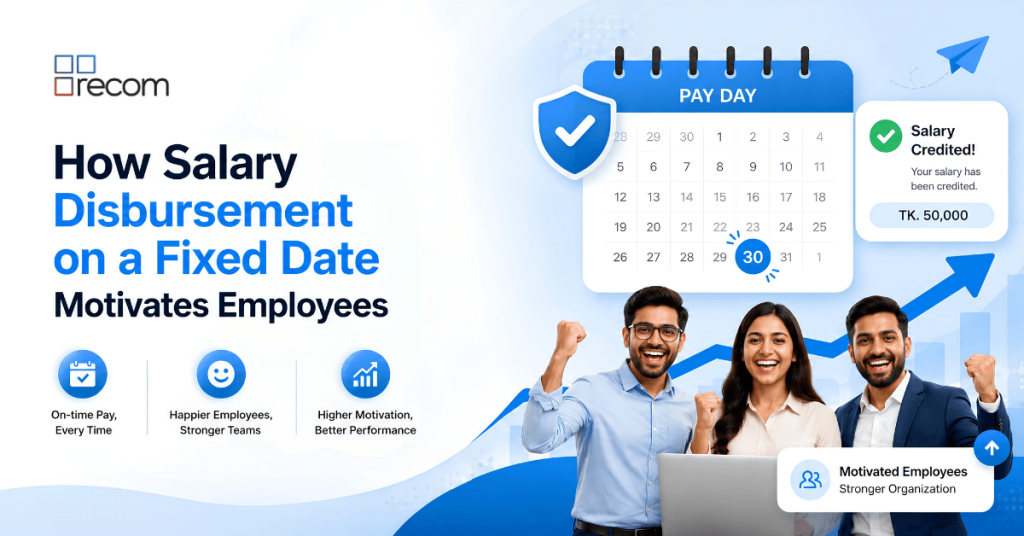
Employee motivation is one of the most critical factors influencing organizational success. While companies invest heavily in training programs, incentives, and workplace benefits, one simple practice often has a profound impact on employee satisfaction: paying salaries on a fixed date. Understanding How Salary Disbursement on a Fixed Date Motivates Employees can help businesses build a more productive, loyal, and engaged workforce.
Salary is more than just compensation for work performed. For employees, it represents financial security, recognition, and trust. When organizations consistently disburse salaries on a predetermined date, they create a sense of reliability that positively affects employee morale and performance.
Introduction to Fixed-Date Salary Disbursement
Fixed-date salary disbursement refers to paying employees on the same date each month or payroll cycle. Whether it is the 25th, 30th, or last working day of the month, consistency is the key factor.
Employees often structure their personal finances around expected income dates. Mortgage payments, rent, utility bills, school fees, and loan repayments are frequently scheduled based on salary receipt dates. Any uncertainty regarding payment can disrupt financial planning and cause unnecessary stress.
Organizations that maintain a dependable payroll schedule demonstrate professionalism and respect for their workforce.
Understanding Employee Motivation and Compensation
Motivation can be influenced by both intrinsic and extrinsic factors. Intrinsic motivation comes from personal satisfaction and achievement, while extrinsic motivation includes rewards such as salary, bonuses, and benefits.
Among all extrinsic motivators, salary remains one of the most important. Employees expect fair compensation not only in terms of amount but also in terms of timely delivery.
The Psychological Importance of Timely Pay
Timely salary payments satisfy a fundamental need for security. According to motivational theories such as Maslow’s Hierarchy of Needs, financial stability contributes to an individual’s sense of safety.
When employees know exactly when they will receive their wages, they experience greater confidence and peace of mind.
Why Employees Value Financial Predictability
Predictability enables individuals to:
- Plan monthly expenses
- Manage savings goals
- Pay debts on time
- Avoid late-payment penalties
- Build long-term financial security
A fixed salary schedule eliminates uncertainty and supports healthier financial habits.
How Salary Disbursement on a Fixed Date Motivates Employees
One of the strongest reasons organizations adopt fixed payroll schedules is the positive effect on employee motivation.
Creating Financial Security
Financial security is a cornerstone of employee well-being. When salaries arrive consistently on the same date, employees can confidently meet their obligations.
This security reduces concerns about:
- Rent payments
- Utility bills
- Educational expenses
- Healthcare costs
- Loan repayments
As a result, employees can focus more energy on their work responsibilities.
Reducing Employee Stress
Financial stress is a major source of anxiety for workers worldwide. Late or unpredictable salary payments often lead to emotional strain, affecting concentration and job performance.
Fixed-date salary payments help reduce stress by providing certainty. Employees no longer need to worry about whether their paycheck will arrive on time.
Improving Household Budgeting
Budgeting becomes significantly easier when income dates are known in advance.
Employees can:
- Create monthly spending plans
- Allocate funds for savings
- Schedule automatic bill payments
- Manage emergency funds more effectively
This improved financial control contributes to greater overall life satisfaction.
Building Trust Between Employers and Employees
Trust is one of the foundations of successful employer-employee relationships.
Demonstrating Organizational Reliability
When a company consistently honors its payroll commitments, employees perceive the organization as reliable and financially stable.
Reliability fosters confidence in leadership and encourages employees to reciprocate with commitment and dedication.
Strengthening Workplace Relationships
Trust extends beyond payroll departments. Employees who trust their organization are more likely to:
- Collaborate effectively
- Communicate openly
- Participate in company initiatives
- Support organizational goals
Consistent salary disbursement reinforces these positive behaviors.
Impact on Employee Productivity
Productivity is directly influenced by employee focus and engagement.
Increased Focus at Work
Employees distracted by financial concerns often struggle to maintain concentration.
A fixed salary schedule reduces these distractions, enabling workers to devote their attention to:
- Project completion
- Customer service
- Problem-solving
- Innovation
Improved focus leads to better performance outcomes.
Reduced Financial Distractions
Employees dealing with payment uncertainty may spend work hours contacting banks, creditors, or payroll departments.
Predictable salary payments eliminate much of this disruption, allowing employees to remain productive throughout the workday.
Enhancing Employee Satisfaction and Morale
Employee satisfaction contributes significantly to organizational success.
Feeling Valued and Respected
Timely salary payments send a powerful message that employees are valued.
Workers often interpret punctual payment as evidence that the organization respects their contributions and recognizes their importance.
Encouraging Positive Workplace Attitudes
Satisfied employees are more likely to:
- Maintain positive attitudes
- Support colleagues
- Demonstrate enthusiasm
- Contribute to workplace harmony
This positivity strengthens the overall work environment.
Fixed Salary Dates and Employee Retention
Employee retention remains a major challenge for many organizations.
Lower Turnover Rates
Workers are less likely to seek alternative employment when they trust their employer’s compensation practices.
Consistent payroll processes help create stability and reduce dissatisfaction that could otherwise lead to resignations.
Higher Employee Loyalty
Loyal employees often stay with organizations that meet their financial expectations reliably.
Over time, this loyalty can translate into:
- Reduced recruitment costs
- Better team cohesion
- Stronger institutional knowledge
- Enhanced organizational performance
Influence on Organizational Culture
Salary practices contribute to company culture more than many leaders realize.
Promoting Accountability
A fixed payroll schedule encourages accountability across departments.
Human resources, finance teams, and managers must coordinate effectively to ensure salaries are processed accurately and on time.
Establishing Professional Standards
Organizations known for reliable salary payments often gain reputations as professional employers.
This reputation can help attract talented candidates and strengthen employer branding.
The Role of Payroll Automation
Modern technology makes fixed-date salary disbursement easier than ever.
Eliminating Payment Delays
Automated payroll systems reduce the risk of human error and administrative bottlenecks.
Benefits include:
- Faster processing
- Consistent payment schedules
- Reduced paperwork
- Better compliance
Improving Payroll Accuracy
Accurate payroll calculations increase employee confidence and reduce disputes.
Payroll automation can help ensure:
- Correct salary amounts
- Accurate tax deductions
- Proper benefits administration
- Timely fund transfers
For organizations seeking payroll best practices, resources from the Society for Human Resource Management (SHRM) provide valuable guidance.
Challenges of Inconsistent Salary Payments
Understanding the consequences of delayed salaries highlights the value of fixed-date disbursement.
Financial Anxiety
Irregular salary payments can create significant hardship.
Employees may experience:
- Missed bill payments
- Increased debt
- Damaged credit scores
- Emotional stress
Reduced Employee Engagement
Employees who lose trust in payroll reliability may become disengaged.
Common effects include:
- Lower productivity
- Increased absenteeism
- Reduced motivation
- Higher turnover intentions
These outcomes can negatively impact organizational performance.
Best Practices for Fixed-Date Salary Disbursement
Organizations can maximize the motivational benefits of timely pay through several best practices.
Clear Communication
Employees should understand:
- Payroll schedules
- Payment methods
- Processing timelines
- Procedures for payroll inquiries
Transparent communication minimizes confusion and builds confidence.
Efficient Payroll Systems
Companies should invest in:
- Reliable payroll software
- Secure payment systems
- Compliance monitoring
- Payroll training
These investments support consistent salary delivery.
Future Trends in Employee Compensation
As workplaces evolve, payroll practices continue to improve.
Emerging trends include:
- Real-time payroll tracking
- Earned wage access programs
- Mobile payroll platforms
- AI-powered payroll management
- Enhanced financial wellness programs
Despite technological changes, the importance of predictable salary payments is likely to remain constant.
Organizations that prioritize timely compensation will continue to enjoy higher employee satisfaction and stronger workforce engagement.
Frequently Asked Questions
1. Why is fixed-date salary disbursement important for employees?
It provides financial predictability, reduces stress, and helps employees manage their personal budgets effectively.
2. How does timely salary payment improve employee motivation?
Employees feel secure, valued, and respected when salaries are paid consistently on time, increasing motivation and commitment.
3. Can delayed salary payments affect productivity?
Yes. Financial concerns can distract employees, reduce focus, and negatively impact workplace performance.
4. Does fixed-date salary disbursement improve employee retention?
Absolutely. Reliable payroll practices increase trust and loyalty, reducing employee turnover.
5. How can payroll automation support fixed salary schedules?
Automation improves accuracy, reduces errors, and ensures salaries are processed on time.
6. What role does trust play in salary disbursement?
Consistent salary payments build trust between employers and employees, strengthening workplace relationships and engagement.
7. Can fixed salary dates contribute to organizational culture?
Yes. They promote professionalism, accountability, and reliability, which positively influence company culture.
8. What happens when salary payments are inconsistent?
Employees may experience stress, financial hardship, lower morale, and reduced productivity.
Conclusion
Understanding How Salary Disbursement on a Fixed Date Motivates Employees reveals that timely compensation is much more than an administrative function. It is a strategic practice that directly influences employee well-being, trust, productivity, satisfaction, and retention.
When organizations establish and maintain a reliable salary schedule, they create a workplace environment built on stability and respect. Employees gain financial confidence, experience lower stress levels, and remain focused on achieving organizational goals. In return, employers benefit from improved morale, stronger loyalty, and enhanced performance.
In today’s competitive business landscape, paying salaries on a fixed date is one of the simplest yet most effective ways to motivate employees and strengthen organizational success.